
Cold email works. And when you are trying to send it to 500, 5,000, or 50,000 prospects a month, doing it by hand is impossible.
That is exactly why cold email service providers exist. A provider runs the sending side of outbound for you, from mailboxes and warm-up through to sequences, rotation, and replies.
But finding the right one is a mess. There are dozens of tools in the market, every homepage sounds identical, and half the "best of" lists are written by people who have never actually sent a cold email.
So you end up paying for something that either burns your domains or bills you triple what the pricing page promised.
To save you that search, I ran real campaigns on the top cold email service providers this year.
I tested each on deliverability, channel scope, AI depth, and what the actual bill looks like once you scale past a few mailboxes.
Here are the six that made the cut.
Here is where each tool actually fits, at a glance.
I did not pick these providers by scanning their pricing pages.
First, a quick definition, because the category is loose. A cold email service provider is whoever runs your sending operation, which covers mailboxes, warm-up, sender rotation, sequences, and reply handling.
Some tools on this list cover all of that. Others cover the sending step and expect you to buy the rest separately.
That gap is what most of these five criteria are really testing.
Every provider claims 99% inbox placement on the homepage. And that number falls apart the moment you push past a few mailboxes on a fresh domain. What matters is how the provider handles warm-up, sender rotation, and reputation recovery when a mailbox starts dipping.
Some bundle warm-up on every plan. Some charge extra for it. And one on this list quietly removed warm-up in 2024 and never brought it back. If you want to compare the sending layer that sits under any of these platforms, my cold email infrastructure breakdown covers what actually holds up at scale.
Cold email alone still books meetings, but reply rates hold up better when email is paired with LinkedIn. The pricing model for multichannel varies wildly across these providers. Some bundle LinkedIn on the second-cheapest plan. Some charge per user for it. Others do not do LinkedIn at all and expect you to buy a second tool.
I checked the actual scope on each one, not the marketing claim on the homepage.
The sticker price on the pricing page and the real bill after four months are two different numbers. Per-seat pricing punishes growing teams. Add-on credits for enrichment, lead data, or extra mailboxes stack up fast. So I looked for providers where the entry price roughly reflects the actual cost of running the thing.
If budget is your deciding factor, my email sending tools roundup goes deeper on that angle.
Every provider on this list has "AI" on the homepage. The real question is whether the AI writes a full multi-step sequence you can actually send, or whether it just shuffles subject line variants and calls it personalization.
I gave each one the same prompt to write a four-step sequence targeting Series A founders. Some produced something usable. Others produced something I had to rewrite from scratch.
If you are one person, this criterion does not matter much. But if you are five people or an agency running ten clients, it decides whether the provider is usable at all. I looked at shared inboxes, client workspaces, white-label options, and how sanely the pricing scales as you add seats.
Here is how each of the six actually held up once I ran them on live campaigns.
Salesforge is the best cold email service provider because it covers the full sending operation in one subscription and includes warm-up on every plan at no extra cost. Most tools on this list sell you a sequencer. You still source the mailboxes, buy the warm-up, and bolt on LinkedIn yourself.
That difference showed up fast in testing. Unlimited mailboxes, ESP-matched rotation, free Warmforge warm-up, email and LinkedIn in one conditional sequence, and every reply landing in Primebox.
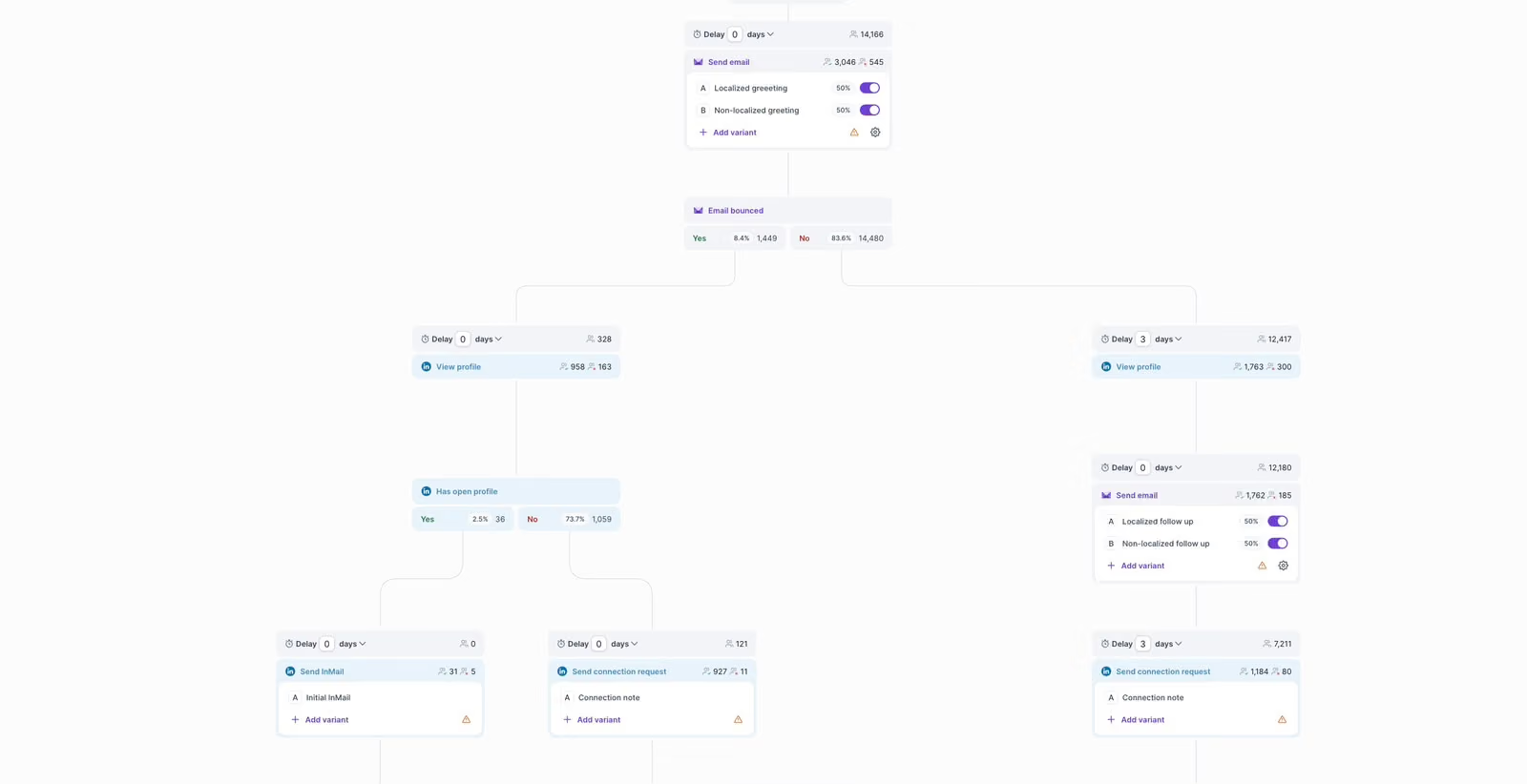
And the AI actually writes sequences worth sending, not just subject line variants. If you want the whole motion run for you, Agent Frank handles prospecting, writing, and follow-up on his own.
Bonus read: cold email AI.
The second cold email service provider on my list is Instantly, and it earns a spot here because the entry pricing model is genuinely one of the simplest in the category. Unlimited email accounts and warm-up on every outreach plan. And for teams that only need email, that is a fair pitch.
But the platform is split into four separate products. Outreach, Leads, CRM, and AI Agents. Each on its own subscription. So the $47/mo Growth tier is outreach-only, and adding the lead database or the AI Reply Agent means stacking two or three subscriptions on top.
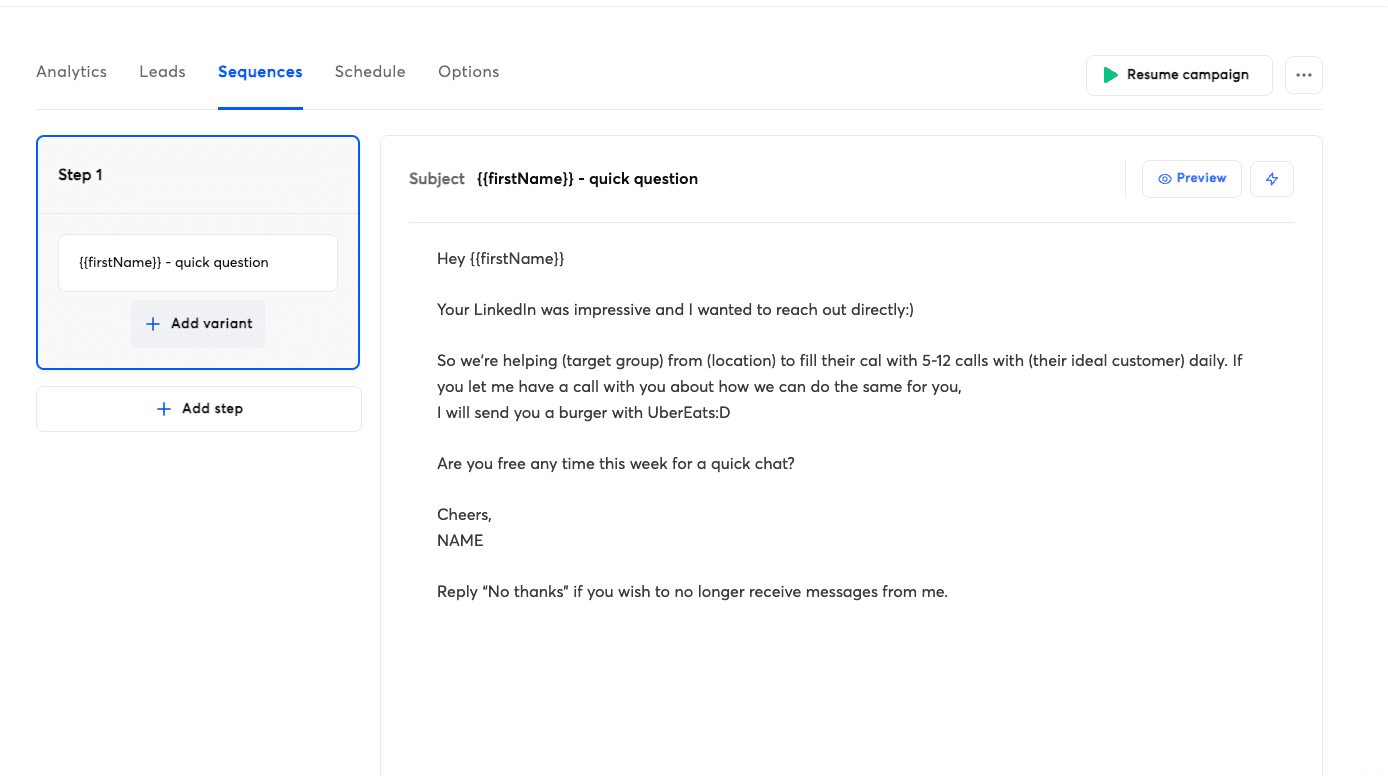
I have watched teams sign up for the sticker price and end up paying triple within a quarter. That said, the warm-up network on Instantly is one of the largest in the space, and reviewers consistently call it out as the strongest piece of the platform.
Bonus read: Instantly alternatives.
Another cold email service provider worth flagging is Smartlead, and it earns its spot for one specific reason.
Almost every outbound agency I have spoken to in the last year has either tested it or moved onto it. That is not a coincidence. Smartlead is the agency pick.
Client workspaces, white-label at $29/mo per workspace, unlimited mailboxes on every tier, and a master inbox with AI reply categorization. If you are running multi-client outbound and need real infrastructure to separate campaigns, this is the provider built for that job. The reliability question is worth thinking about, though.
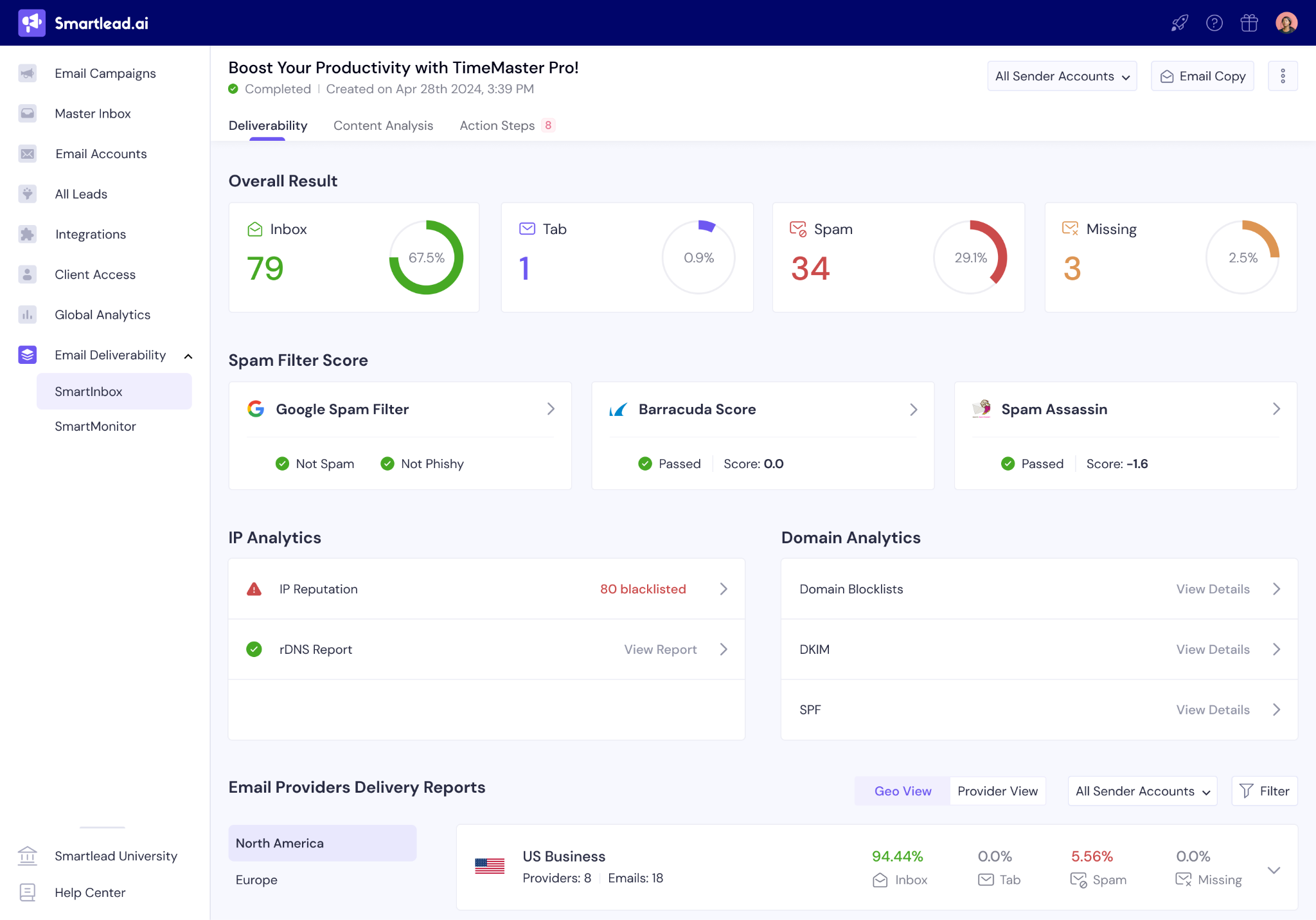
Reviewers consistently flag campaigns failing to send and warm-up pausing without warning, and the real bill lands closer to 3-5x the sticker once SmartSenders mailboxes, SmartDelivery placement tests, and email verification stack up.
Bonus read: Smartlead alternatives.
Next up on my list is Apollo.io, and here is the honest way to think about it. Apollo is a data-first tool with a sequencer bolted on, not a provider that runs your sending operation. That distinction matters because it explains why almost everything about the sending experience feels secondary to the database itself.
The 275M+ contact database on Apollo is genuinely one of the strongest in the category, and the ability to search, filter, and sequence from one login is why 600,000+ companies use it. But the deliverability story is where Apollo struggles as a cold email service provider.
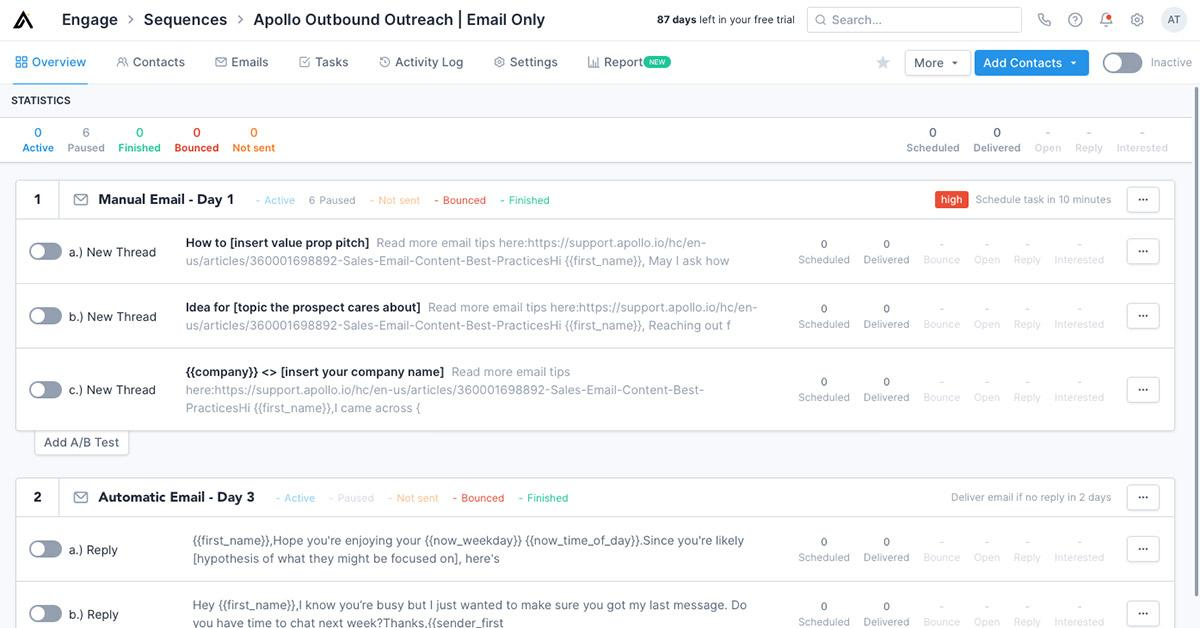
Apollo removed its email warm-up feature in 2024 and never brought it back. Reviewers report bounce rates of 15-35% on unverified lists. Data accuracy is the most-cited complaint on G2 with 503+ reviews flagging it, and international data quality drops noticeably below the 88% US accuracy figure.
Bonus read: warming up domains.
Lemlist takes a different angle on what a cold email service provider should do. If personalization is your edge, this is the tool built for that job. Dynamic images, personalized videos, and custom landing pages per prospect. It basically invented the visual-personalization category, and the execution is still ahead of the rest.
The channel scope on Lemlist is also the broadest on this list. Email, LinkedIn, calling, WhatsApp, and SMS in one workflow. Lemwarm for warm-up is included on every plan and has built sender reputation for thousands of accounts.
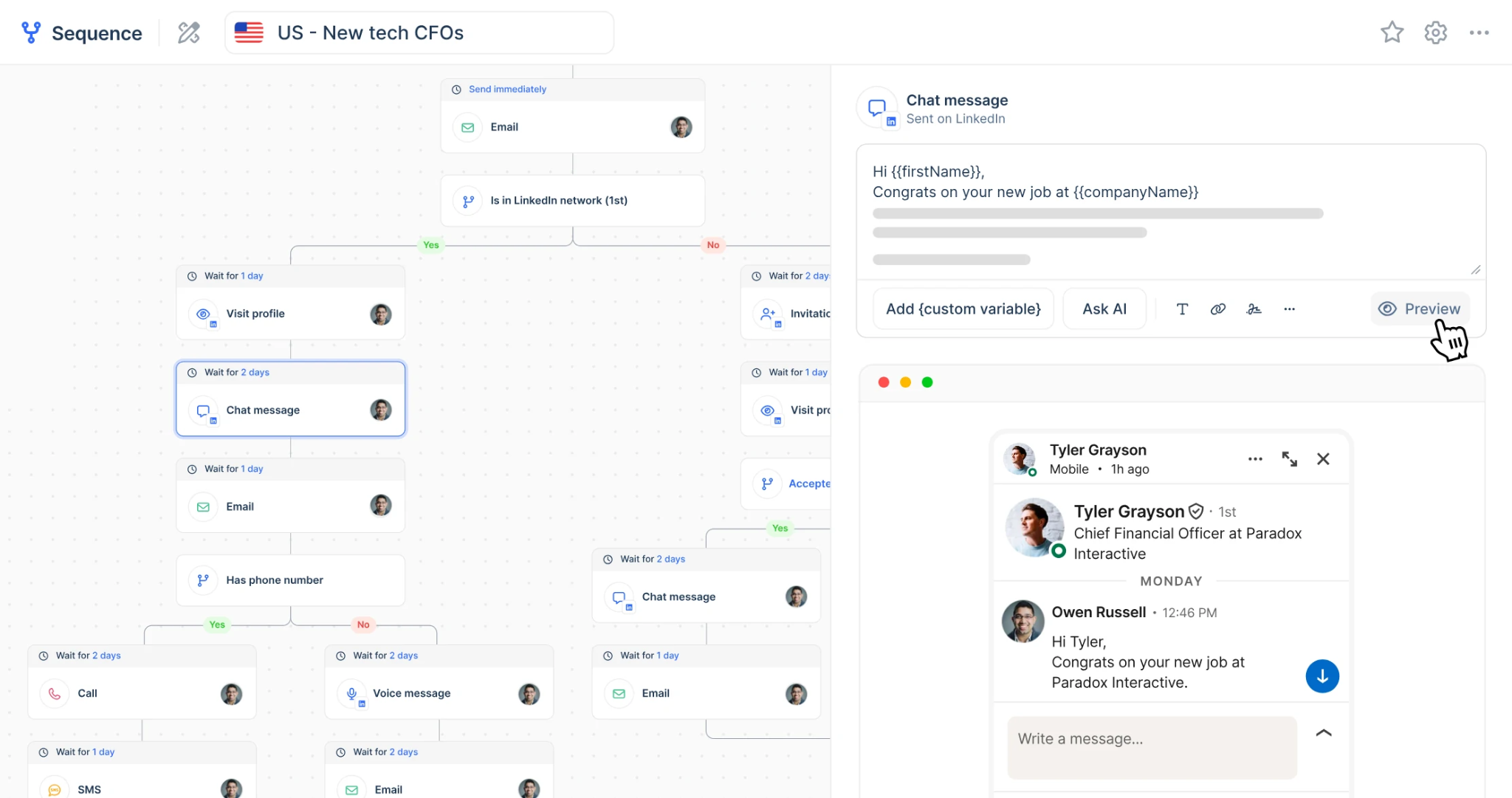
The thing that almost made me skip it is the pricing. The Email plan at $55/mo is flat and reasonable. But the Multichannel plan, which is where the LinkedIn features actually live, is $87/user/mo. Five reps on Multichannel is $435/mo before Lead Finder credits, before phone lookups at 20 credits each, before intent signals. That math compounds fast.
The last cold email service provider on my list is Saleshandy, and it earns its spot because it is the cheapest legitimate entry point in the category. If you are a solo founder or a small team on a tight budget doing pure email-first outreach, Saleshandy at $34/mo is a hard price to argue with.
Unlimited email accounts on every tier, sender rotation included, and AI Sequence Copilot to speed up setup. 25,000+ businesses use it, G2 sits at 4.6 across 773 reviews, and the Starter tier gives you 2,000 active prospects and 6,000 emails per month.
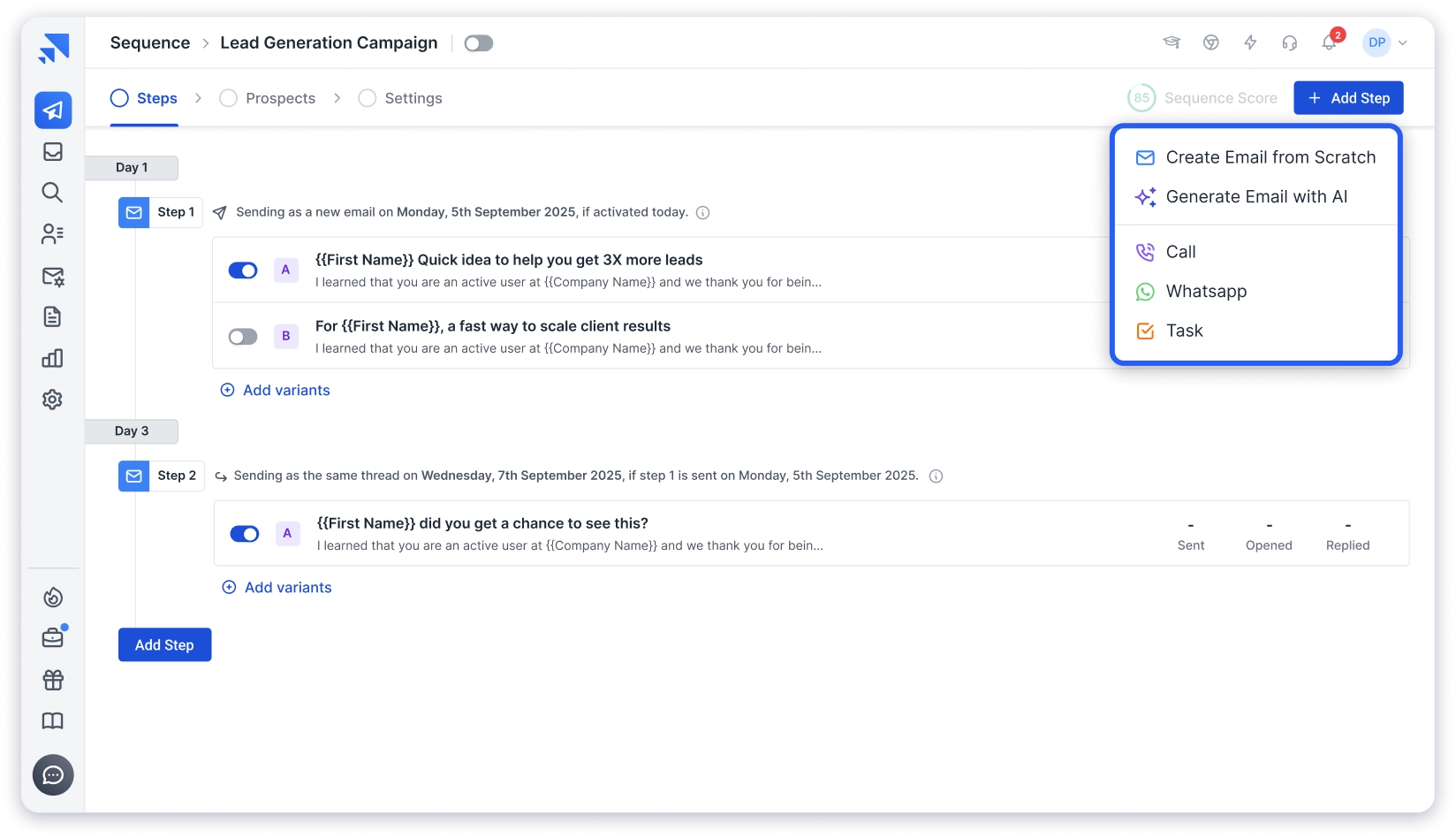
The multichannel scope is where it gets more complicated. Saleshandy's homepage claims full multichannel with email, calls, LinkedIn, and WhatsApp, but the dialer and LinkedIn actions are sold as separate add-on products, not bundled into the core Outreach plans. So the "multichannel" claim is technically true only if you stack multiple subscriptions.
Bonus read: pre-warmed email accounts.
For me, Salesforge is the best cold email service provider in 2026 because it covers the whole service, not just the sending step. Unlimited mailboxes, free Warmforge warm-up on every plan, ESP-matched rotation, email and LinkedIn in one sequence, and Agent Frank when you want outbound to run on its own.
Try Salesforge free for 14 days and run it against a real campaign to see how it holds up on your own domain.
Salesforge is the best cold email service provider in 2026 for teams that want mailboxes, warm-up, and email plus LinkedIn sending under one subscription. Instantly is the best pick for high-volume email-only sending. Smartlead is best for agencies managing multiple clients. The right provider depends on your channel scope, volume, and pricing model.
A cold email service provider runs the sending side of your outbound campaigns. That usually covers mailboxes, warm-up, sender rotation, sequence automation, and reply management in one place. Some providers cover every layer. Others handle sequences only and expect you to buy mailboxes and warm-up separately, which is where most of the hidden cost shows up.
Salesforge is the strongest AI cold email platform because Agent Frank runs the full outbound cycle autonomously, from prospecting to booking meetings. Other AI features in the category, like Instantly's Sales Agent or Lemlist's lemAgent, focus on individual tasks like sequence writing or reply handling rather than end-to-end automation.
Yes, cold email is still effective in 2026 when it is paired with clean lists, proper deliverability infrastructure, and personalized copy. Average reply rates have declined compared to previous years, but well-run campaigns on dedicated infrastructure with warmed mailboxes still generate meetings at scale. The campaigns that stop working are the ones sending generic copy from shared, unwarmed mailboxes to unverified lists.
The 30/30/50 rule is a guideline for structuring cold email content. About 30% of the message should focus on the prospect and their problem, 30% on how the solution addresses that problem, and the final 50% on a clear, low-friction call to action. It is a rough heuristic, not a strict rule, and works best as a starting frame rather than a hard structure.
Cold emails are legal in most jurisdictions when they comply with local regulations. In the US, the CAN-SPAM Act sets the rules and allows commercial email as long as you honor opt-out requests, include a physical address, and avoid deceptive headers. GDPR in the EU requires a legitimate interest basis for B2B cold email and mandatory opt-out. Regulations vary by country, so verify compliance for your target market before sending.
Entry-level cold email service providers start around $32.50 to $47 per month on annual billing for basic outreach features. Mid-tier plans with team seats, higher sending volumes, and multichannel features typically run $80 to $175 per month. Enterprise and AI SDR tiers can go up to $500 per month or more depending on features and volume needs.