
Personalized Outbound Strategy
Get The Right Outbound Strategy In Minutes
Enter your email to get a custom plan & stack recommendation for your business
It's being carefully crafted by AI
Please check your mailbox in 5 minutes

Email infrastructure is not something you set up once and forget. When a team runs cold email at scale, someone has to constantly monitor mailboxes, domains, DNS records, warmup status, sending limits, bounce rates, and deliverability issues.
This usually happens across multiple tools, which makes operations slow and prone to breaking.
MCP servers add a new layer to this process. They allow AI tools like Claude, Cursor, and ChatGPT to connect directly with email infrastructure systems and interact with them. That means AI is not only generating email copy anymore.
It can also monitor mailbox health, detect infrastructure problems, review deliverability signals, and support sending operations.
That is why MCP servers are becoming important for email infrastructure in 2026. In this guide, we will compare Primeforge, Mailforge, Saleshandy, Infraforge, and Mailgun based on infrastructure capabilities, AI workflow support, and the type of email operations they are best suited for.
Most outbound teams already use tools for mailbox setup, warmup, sending, and deliverability tracking. The problem is that these systems usually work separately, which creates a lot of manual operational work.
MCP servers help connect AI workflows with those infrastructure systems. Instead of checking everything manually, teams can use AI tools to monitor infrastructure, review deliverability signals, and support operational tasks across different platforms. Here are some common things MCP servers can help with in email infrastructure:
| Use Case | What It Helps With |
|---|---|
| Mailbox Health Monitoring | Check mailbox reputation, inbox health, and sending stability |
| Deliverability Monitoring | Review bounce rates, spam placement, and deliverability signals |
| Domain Management | Monitor domains, DNS records, and infrastructure setup |
| Warmup Tracking | Track mailbox warmup activity and sending readiness |
| Sending Operations | Review sending limits, inbox rotation, and email activity |
| Infrastructure Alerts | Detect infrastructure issues before campaigns get affected |
| AI Workflow Automation | Connect Claude, Cursor, or ChatGPT with infrastructure operations |
| Multi-Tool Operations | Manage infrastructure workflows across multiple platforms from one setup |
Running a cold email infrastructure usually means managing domains, mailboxes, deliverability, warmup, sending activity, and infrastructure issues every day. So while comparing these MCP servers, I focused on how useful they actually are for handling those operational tasks. Here are the main things I evaluated:
These points helped me understand which tools are better for mailbox infrastructure, which ones are stronger for automation workflows, and which platforms are more practical for scaling cold email operations.
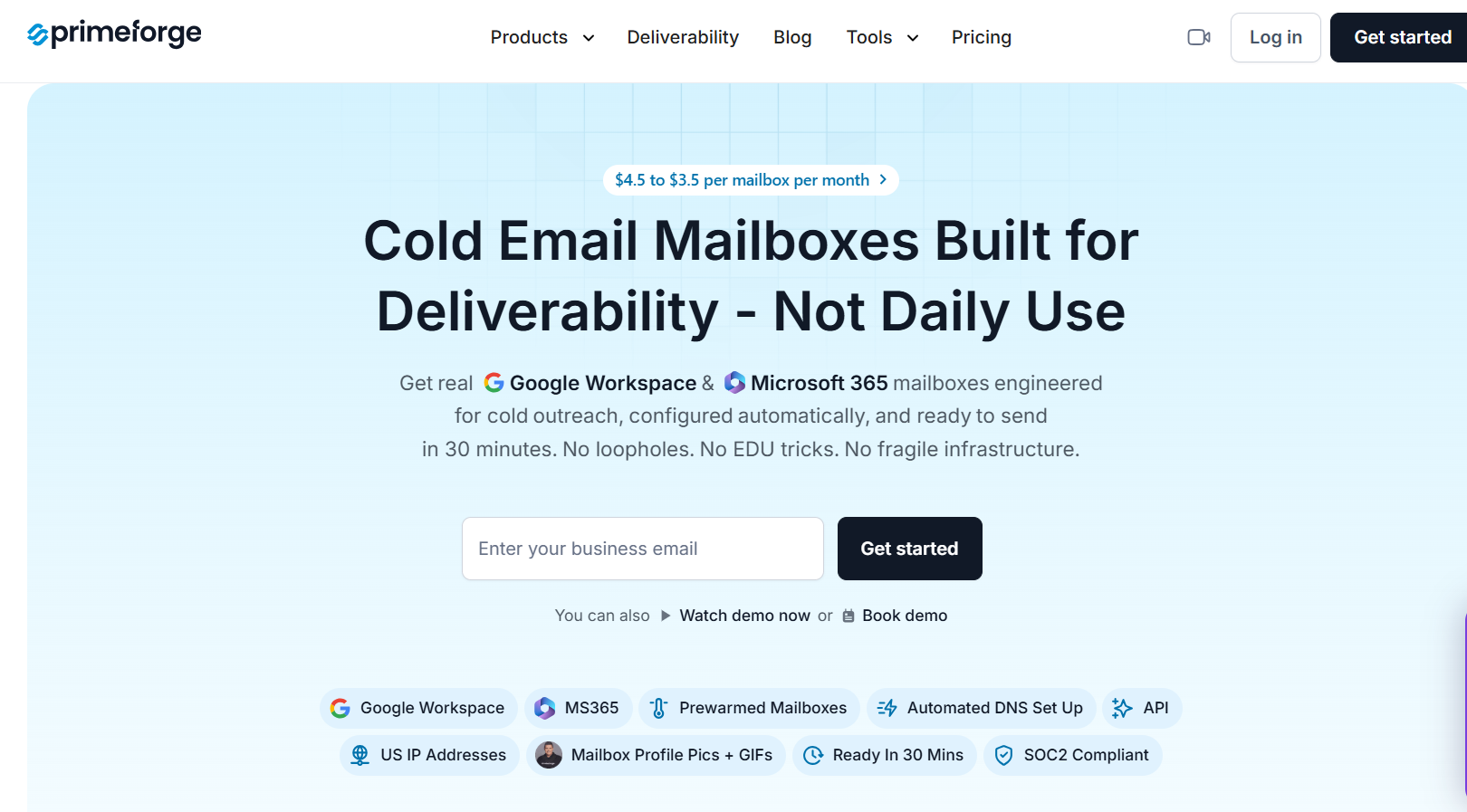
Primeforge is a cold email infrastructure platform focused on Google Workspace and Microsoft 365 mailbox operations. The platform is connected to the Forge MCP ecosystem, which allows AI tools like Claude, Cursor, and Windsurf to interact with Primeforge tools and infrastructure operations through MCP-compatible workflows.
The platform is mainly designed for outbound teams managing domains, mailboxes, warmup workflows, and large-scale cold email infrastructure.
Primeforge works through the Forge MCP Server. Users connect their Primeforge account to MCP-compatible AI tools using API keys generated from the Primeforge dashboard. Once connected, the AI assistant can access Primeforge tools and infrastructure operations through authenticated API requests.
Instead of manually using dashboards, users can interact with mailbox and domain infrastructure directly from tools like Claude or Cursor using natural language prompts.

The MCP setup also works together with other Forge products like Salesforge, Mailforge, Infraforge, Warmforge, and Leadsforge through the same MCP endpoint.
The Primeforge MCP setup exposes infrastructure-related operations through the Forge MCP ecosystem. This includes:
Primeforge infrastructure is built around Google Workspace and Microsoft 365 mailboxes with automated DNS setup.
Primeforge MCP workflows are mainly useful for outbound and infrastructure teams managing large mailbox operations. Some example workflows include:
The MCP layer allows these actions to happen directly through AI assistants instead of manually switching between infrastructure dashboards.
Primeforge works with MCP-compatible AI clients through the Forge MCP Server. Supported clients are:
Primeforge mailbox pricing starts around $4.5 per mailbox per month with annual billing. Domains are priced separately depending on the domain extension.
Primeforge is one of the strongest options for teams looking for MCP-connected cold email infrastructure. The platform combines Google Workspace and Microsoft 365 mailbox infrastructure with AI-driven workflows through the Forge MCP ecosystem, making it useful for teams managing large outbound infrastructure operations.
How to Set Up Cold Email Infrastructure in 10 Minutes with Claude Code + MCP
Enter your email to get a custom plan & stack recommendation for your business
Please check your mailbox in 5 minutes
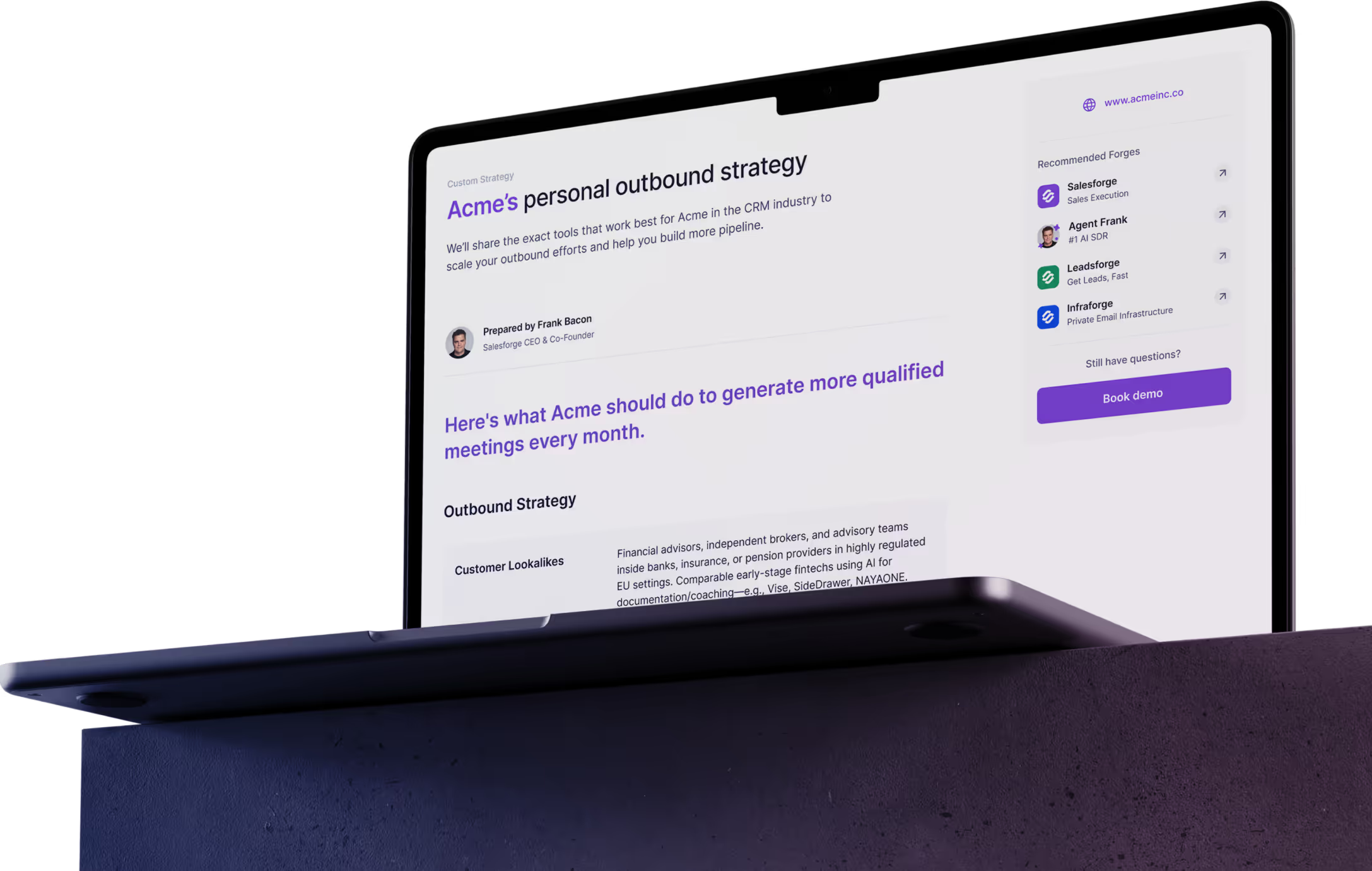

Mailforge is a distributed email infrastructure platform built for cold outreach. It helps teams create domains, configure DNS records, and manage large numbers of mailboxes using a shared IP setup optimized for outbound sending.
According to the platform, setup takes only a few minutes and supports bulk infrastructure creation for scaling campaigns faster.
The platform is also connected to the Forge MCP ecosystem, giving MCP-compatible AI tools access to Mailforge systems and operations.
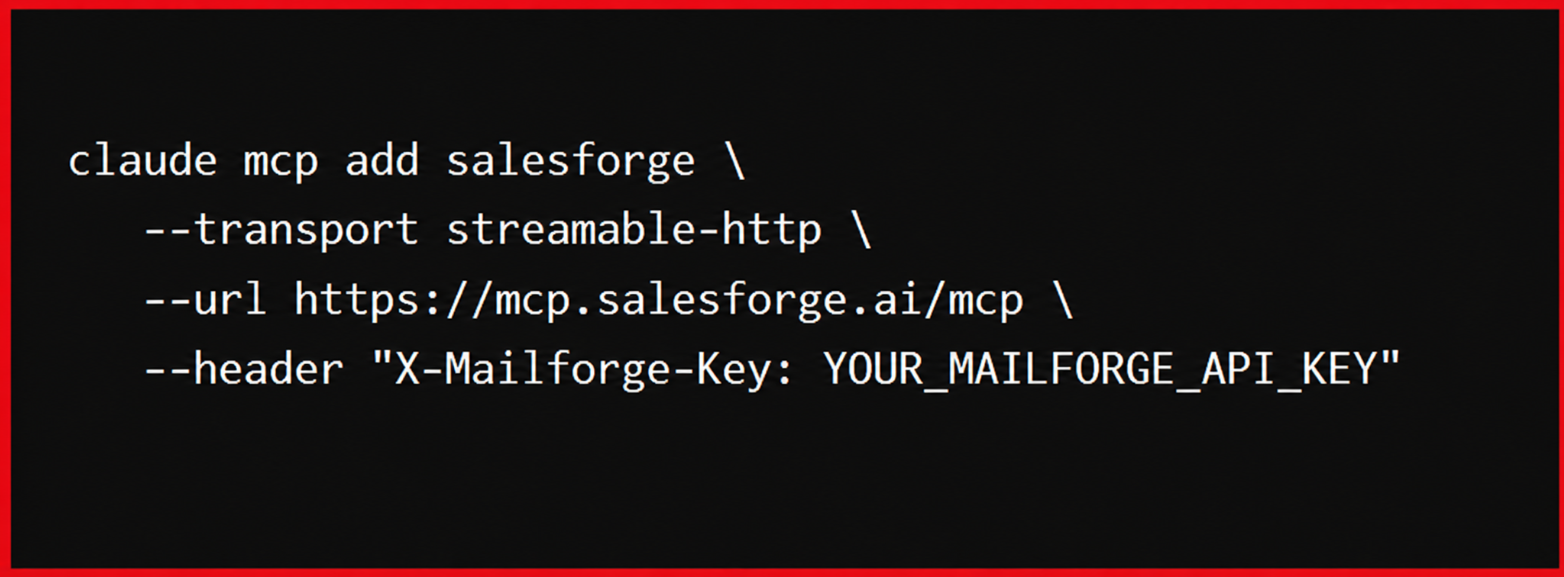
Users connect Mailforge to Claude, Cursor, Windsurf, and other MCP-compatible clients using API keys generated from the Mailforge dashboard. After setup, the AI client can work with Mailforge tools through authenticated API requests.
This allows users to handle setup tasks, mailbox operations, and domain-related actions directly from the AI interface instead of manually working inside dashboards.
The same Forge MCP connection can also expose tools from Salesforge, Primeforge, Infraforge, Warmforge, and Leadsforge through a single endpoint.
The MCP connection exposes several Mailforge operations inside supported AI clients. This includes:
The platform is designed specifically for cold outreach rather than traditional business email usage.
This setup is mainly useful for teams running large cold email campaigns across many domains and mailboxes. Here are some common use cases of Mailforge MCP Server:
Instead of switching between infrastructure dashboards, teams can handle most repetitive tasks directly from their AI client.
Supported MCP-compatible clients include:
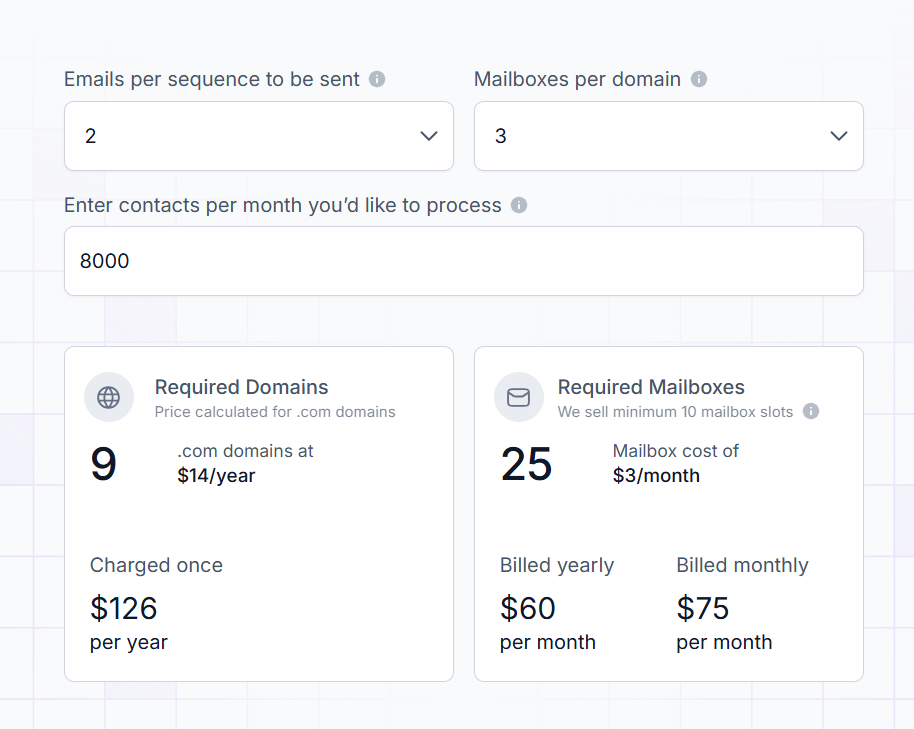
Pricing starts around $3 per mailbox per month with annual billing. Monthly billing for 25 mailbox slots costs around $75 per month. Domain pricing depends on the extension selected.
If you want scalable shared IP infrastructure connected to AI-driven MCP workflows, Mailforge is a great option. It fits especially well for outbound teams managing high sending volume across multiple domains and mailbox pools.
Saleshandy MCP is a Model Context Protocol integration that allows AI tools like ChatGPT, Claude, Zapier MCP, and n8n to interact directly with a user’s Saleshandy outreach workspace.
Instead of using AI only for writing cold emails, Saleshandy MCP allows users to manage sequences, prospects, inbox conversations, tasks, analytics, and campaign actions directly from AI clients using prompts.
The setup is mainly built for outbound and sales teams that want to manage outreach workflows, campaign operations, and daily execution tasks from one AI-driven interface instead of constantly switching between multiple dashboards.
Saleshandy MCP connects AI clients to a user’s Saleshandy workspace using secure API-based authentication. After generating an API key, users can connect platforms like Claude, ChatGPT, Zapier MCP, or n8n to their outreach environment.
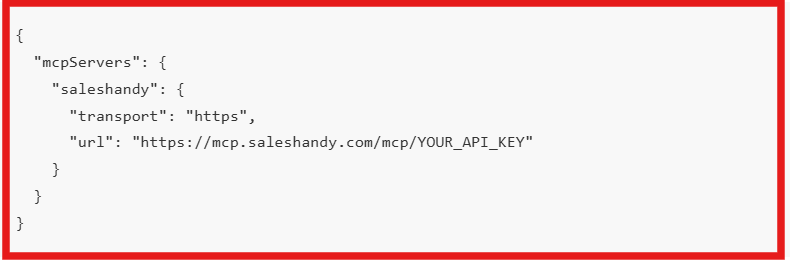
Once connected, the AI tool can execute supported actions inside Saleshandy in real time. Users can create sequences, review account performance, manage prospects, pause campaigns, or check analytics directly from the AI client.
Saleshandy MCP supports more than 40 outreach-related actions. Some supported actions include:
The platform focuses more on outreach management, campaign execution, inbox workflows, and analytics.
Saleshandy MCP is mainly useful for sales teams handling daily outreach activities. Here are some use cases of Saleshandy MCP:
The setup helps teams handle common outreach actions faster from one interface.
Saleshandy MCP currently works with:
Saleshandy Outreach plans start at $25/month with unlimited email accounts and 2,000 active prospects. Higher plans increase sending limits, analytics features, and campaign capacity.
The platform also offers email infrastructure add-ons starting around $2.99–$3.99 per mailbox per month depending on the billing model selected.
Saleshandy is ideal for teams that want AI-connected outreach management instead of only email infrastructure control. It fits especially well for users who want to manage campaigns, inbox activity, prospect operations, and reporting directly from AI tools.
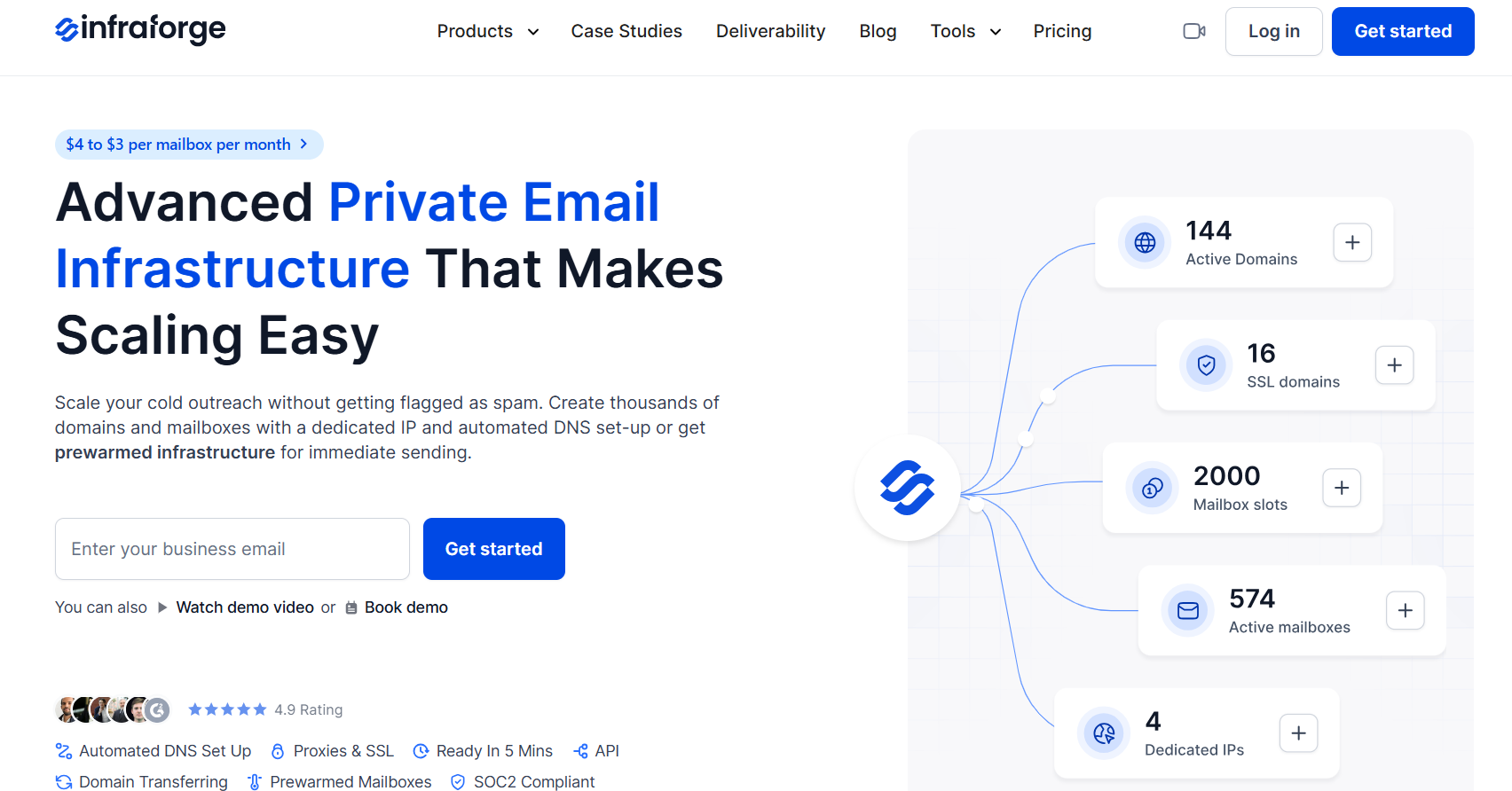
Infraforge is a private email infrastructure platform connected to the Forge MCP ecosystem. It is designed for teams that want dedicated IP infrastructure for cold outreach instead of shared sending environments.
Through MCP-compatible AI tools, users can interact with Infraforge domains, mailboxes, DNS systems, and infrastructure management workflows directly from AI clients.
The setup is mainly built for outbound teams managing dedicated sending infrastructure, domain reputation, and deliverability-sensitive cold email operations.
Infraforge works through the Forge MCP Server, which exposes Infraforge tools through a single MCP endpoint. Users connect their Infraforge account using API keys and then access Infraforge operations from AI tools like Claude, Cursor, Windsurf, and other MCP-compatible clients.
Once connected, users can manage infrastructure-related actions directly from the AI interface instead of handling everything manually through dashboards.
The same MCP connection can also expose other Forge products like Primeforge, Mailforge, Salesforge, Leadsforge, and Warmforge depending on the API keys configured.
The Infraforge MCP setup exposes infrastructure and deliverability-related operations through the Forge MCP ecosystem. This includes:
Infraforge is built around dedicated IP infrastructure optimized specifically for cold outreach.
Infraforge MCP workflows are mainly useful for teams managing private email infrastructure at scale.
Some practical use cases include:
The MCP connection helps teams manage complex infrastructure tasks faster without constantly moving between multiple admin panels.
Infraforge works with MCP-compatible AI tools through the Forge MCP ecosystem. Supported clients include:
Infraforge mailbox pricing starts around $4 per mailbox per month with annual billing. Quarterly billing costs around $5 per mailbox per month. Domains are priced separately depending on the extension selected.
Additional add-ons include:
Infraforge is a strong option for teams that want MCP-connected private email infrastructure with dedicated IP control. It fits especially well for outbound teams that care heavily about deliverability, infrastructure ownership, domain reputation management, and scalable cold email operations.

Mailgun MCP Server is an open-source Model Context Protocol server that allows AI assistants like Claude, Cursor, and other MCP-compatible clients to interact directly with Mailgun APIs using natural language.
Instead of manually navigating dashboards or writing API scripts, users can query email analytics, monitor deliverability metrics, validate domains, troubleshoot DNS issues, and send emails directly from AI tools.
Unlike Forge products that focus heavily on outbound infrastructure operations, Mailgun MCP is more focused on email analytics, reporting, deliverability monitoring, and API-level email management.
Mailgun MCP Server runs locally on the user’s machine and connects AI assistants to the Mailgun API through MCP-compatible integrations. Users install the open-source MCP server, configure their Mailgun API key, and then connect it to tools like Claude Desktop, Claude Code, Cursor, or Windsurf.
Once configured, the AI assistant can execute supported Mailgun actions using conversational prompts instead of manual API calls or dashboard operations. Here’s an example of the kind of metrics you can pull using Mailgun MCP:

Mailgun MCP exposes more than 50 Mailgun operations through MCP-compatible AI tools. This includes:
Most actions are read-only, except for email sending capabilities.
Mailgun MCP is mainly useful for teams that want conversational access to email analytics and deliverability data. Some practical use cases are:
The setup helps developers and email teams access Mailgun data faster without constantly switching between dashboards or writing custom scripts.
Mailgun MCP Server works with:

Mailgun MCP Server itself is available for free and works across all Mailgun plans. Users still need an active Mailgun account and API key to access Mailgun services. The MCP server is open-source and available through GitHub and npm.
Mailgun MCP Server is for teams that want AI-connected access to email analytics, deliverability monitoring, and Mailgun API operations. It works well for developers, email teams, and technical operators who want conversational access to performance metrics, bounce analysis, DNS troubleshooting, and reporting workflows.
The right MCP server depends on what part of email infrastructure you actually manage.
Some platforms focus on mailbox infrastructure and outbound sending. Others focus more on campaign operations, analytics, or deliverability monitoring.
Here is a simple breakdown:
| If You Need | Best Option |
|---|---|
| Google Workspace and Microsoft 365 cold email infrastructure | Primeforge |
| Shared IP mailbox infrastructure for scaling cold outreach | Mailforge |
| AI-connected outreach and campaign management | Saleshandy |
| Dedicated IP infrastructure with more infrastructure control | Infraforge |
| Deliverability analytics, reporting, and Mailgun API operations | Mailgun |
For most outbound teams, Primeforge is usually the strongest overall choice because it combines:
This makes it more complete for teams managing real outbound infrastructure instead of only analytics or campaign execution. If you want cheaper shared-IP scaling, Mailforge is a better fit. If you need dedicated IP control, Infraforge makes more sense.
And if your focus is mainly campaign management or analytics, then Saleshandy or Mailgun may fit better depending on your workflow.
Enter your email to get a custom plan & stack recommendation for your business
Please check your mailbox in 5 minutes
MCP servers are changing how outbound teams manage email infrastructure. Instead of relying completely on dashboards and manual operations, teams can now use AI tools to interact directly with domains, mailboxes, outreach systems, and deliverability workflows. But different MCP platforms solve different problems.
That difference matters a lot once you start scaling cold outreach. For teams managing real outbound infrastructure, Primeforge stands out because it connects Google Workspace and Microsoft 365 infrastructure directly to MCP-driven workflows through the Forge ecosystem.
Instead of only helping with reports or campaign actions, it gives teams more control over the actual infrastructure layer behind cold outreach.
If your goal is building AI-connected outbound infrastructure in 2026, Primeforge is one of the strongest platforms to consider.