Lemlist has been around long enough that most outbound teams already have an opinion about it.
But what matters is what Lemlist is actually like once you’re inside—and whether the price makes sense for what you get.
That’s what this review is about.
I looked beyond the usual feature lists and marketing claims, including Lemlist’s Help Center, sending guidance, and Terms of Service. Because there’s often a gap between what a tool promises on its website and how it actually works in practice.
So in this Lemlist review, I’ll break down the setup, key features, real pricing for a small team, and a few places where Lemlist’s own pages don’t quite agree.
By the end, you’ll have a much clearer idea of whether Lemlist fits your outbound motion.
Lemlist calls itself an AI outbound platform for relevant outreach at every scale.
Their own FAQ puts it more plainly. It is an AI-powered sales engagement platform that finds leads, personalises outreach and runs multichannel campaigns across email, LinkedIn, calls, WhatsApp and SMS.
The company behind it is Lempire, a bootstrapped French business founded by Guillaume Moubeche. It reported $26M ARR in 2024 and says more than 20,000 sales teams run outbound in the product.
One label is worth correcting before you search further. Lemlist does not describe itself as a cold email platform anywhere on its own site, and that framing comes from reviewers rather than from the company.
The setup path is short on paper and long in practice, so it helps to separate the two.
Here is the sequence I followed and the documentation confirmed.
Steps one to three genuinely take minutes. I have no complaints there, and the automated SPF, DKI, and DMARC handling removes the part of the setup where most new senders quietly break something.
Steps four and five are where the timeline stretches. Lemlist's own warmup documentation describes a ramp of one extra email per day, which takes roughly 40 days to reach target volume.
Then a 14-day stabilisation window runs on top of that, and campaigns stay blocked until the warmup score clears 90.
Add it up, and you are looking at seven to eight weeks before a responsible first cold send.
That is not a criticism of the warmup logic, because the pacing is sound. It is a criticism of the "ready to send in minutes, not days" line on the marketing page, which describes provisioning rather than sending.
I opened everything the account would let me open, and I noted where the product stopped me. Here is what each piece actually does.
The builder is clean, and the conditional logic is the real strength here.
You can branch steps on whether someone opened, replied, or did nothing, and you can mix channels inside a single sequence rather than running parallel campaigns.
Opening the "Add step" menu is also the fastest way to understand Lemlist's pricing. On the entry plan, Email was the only unlocked step type I had.
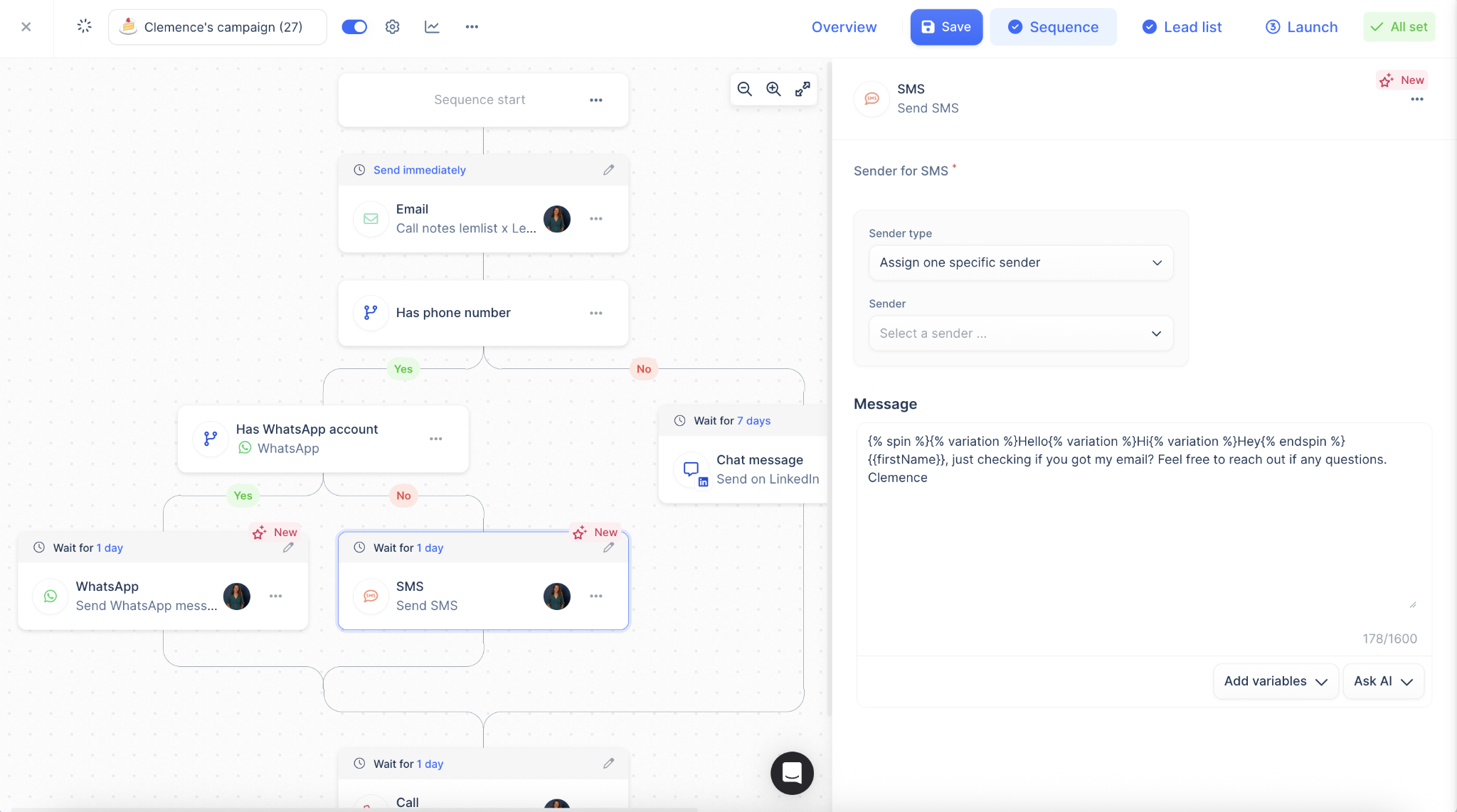
Locked behind an upgrade badge were:
So if you buy Lemlist for multichannel sequences, the entry plan does not give you multichannel sequences. That distinction costs $32 more per user per month on annual billing.
lemAgent is the newest headline feature, and it builds a full multichannel campaign from a single chat prompt.
I gave it a plain brief asking for a multichannel outreach sequence from scratch. What came back was a paywall message telling me to upgrade, because my account had dropped into read-only demo mode after the trial.
That is worth knowing before you plan your evaluation. Once the 14 days lapse, you keep your account and your data, but the parts you most want to test stop responding.
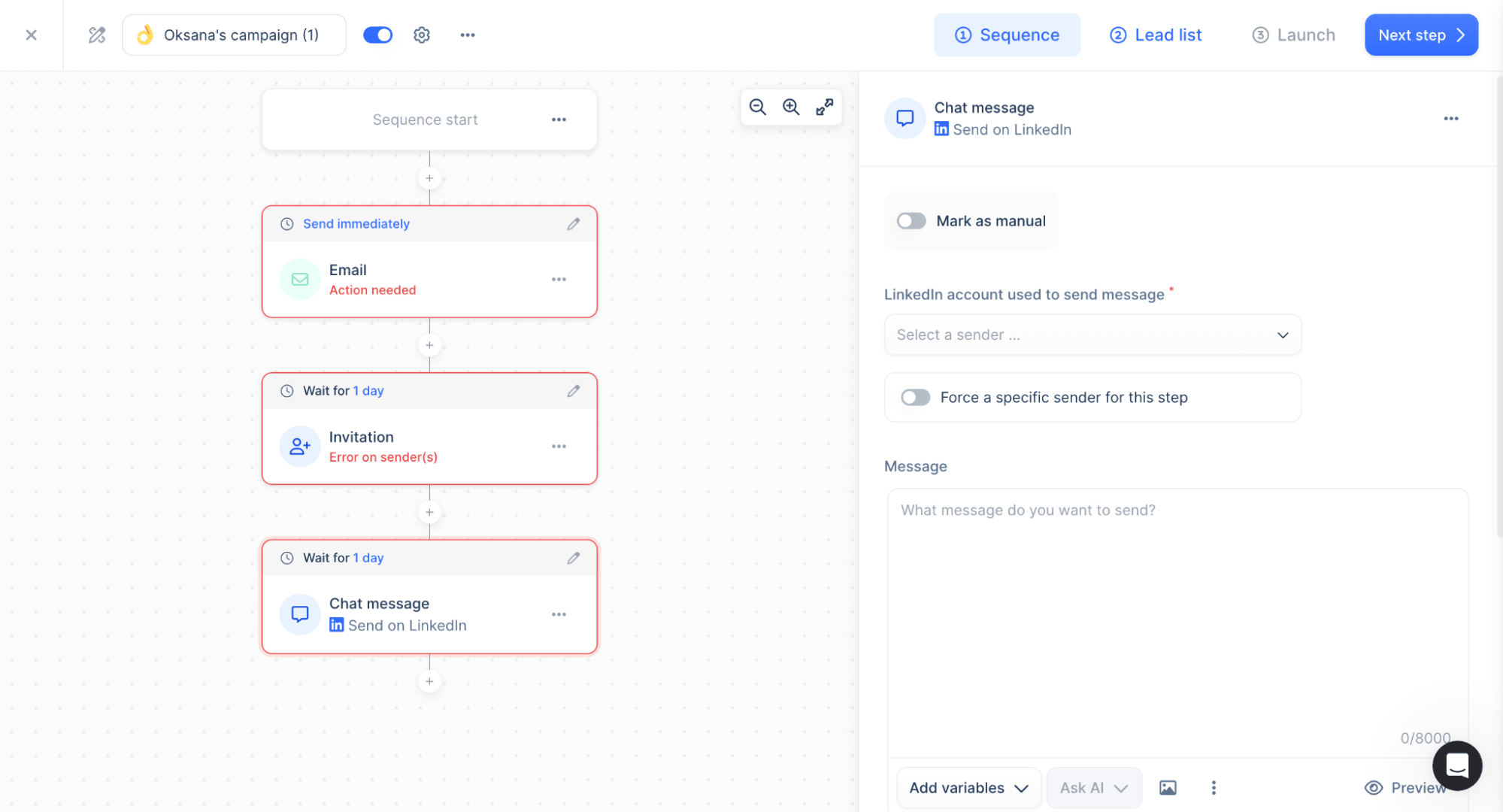
The wider AI layer is broad and includes AI variables for data cleaning, AI reply drafting, out-of-office detection, reply intent detection, and voice cloning from a single recording.
There is one requirement buried in their own copy that changes the maths. Lemlist AI sources data through your OpenAI account, which you link yourself to.
So the AI is not a bundled computer. You bring the key, you pay the usage, and you add a vendor to your stack. If you are comparing AI depth across tools, my breakdown of cold email AI tools shows how differently each platform handles that.
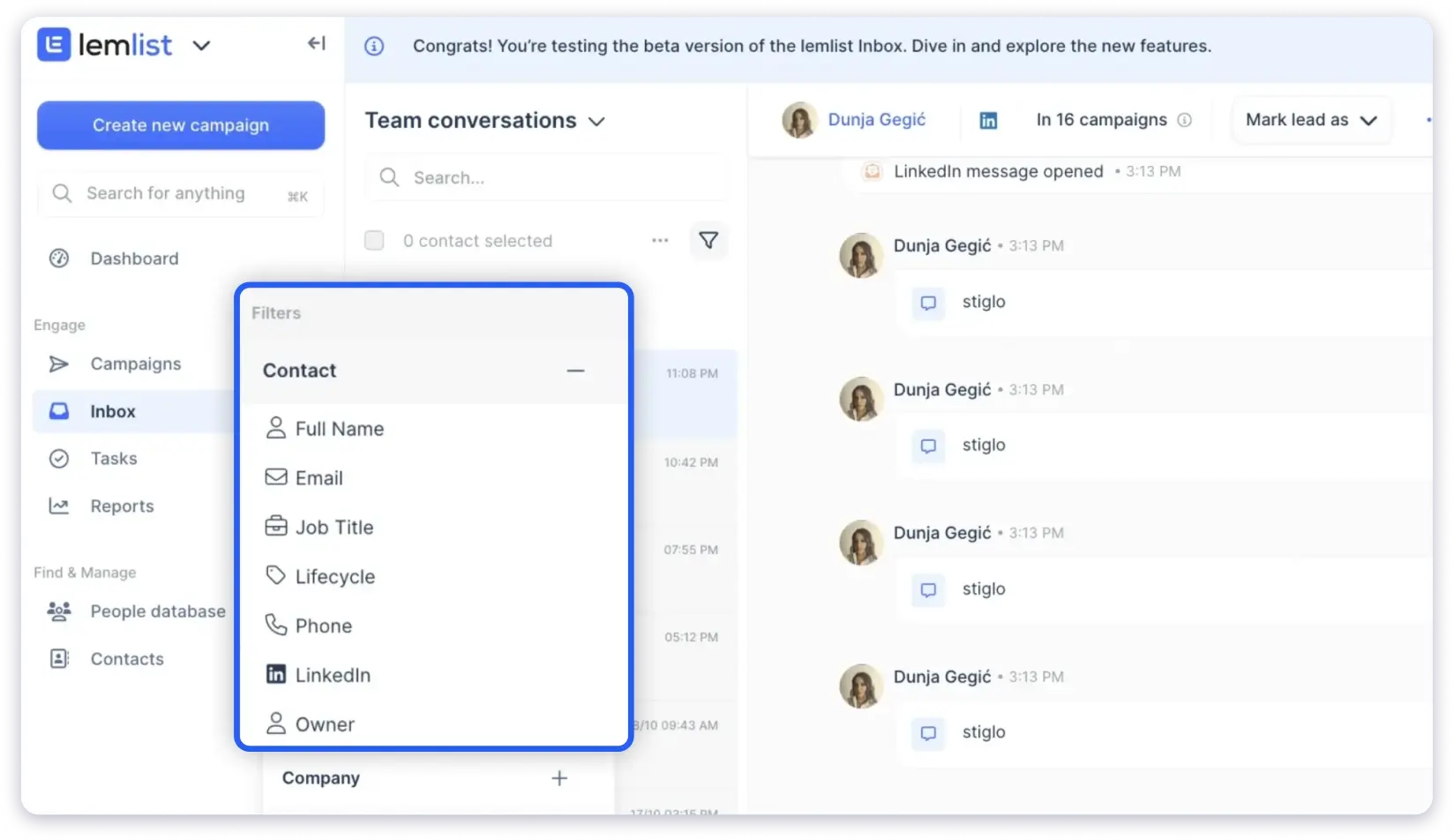
This is the intent-signal layer, and the in-product pitch is one system with three agents and zero manual work.
The three are Scout, which finds buying signals, Engage, which contacts prospects based on them, and Optimize, which tunes your setup weekly.
Only Scout is alive. Engage and Optimize are both labelled "Coming soon" inside the product itself.
I think that is fine as a roadmap, and I would rather see honest in-app labelling than vapourware. Just do not buy Lemlist today for the full three-agent workflow, because two-thirds of it has not shipped.
Every plan includes access to a 650M+ contact database with ICP filters, plus an email and phone finder.
Enrichment runs on credits rather than a flat allowance, which I will cover in the pricing section.
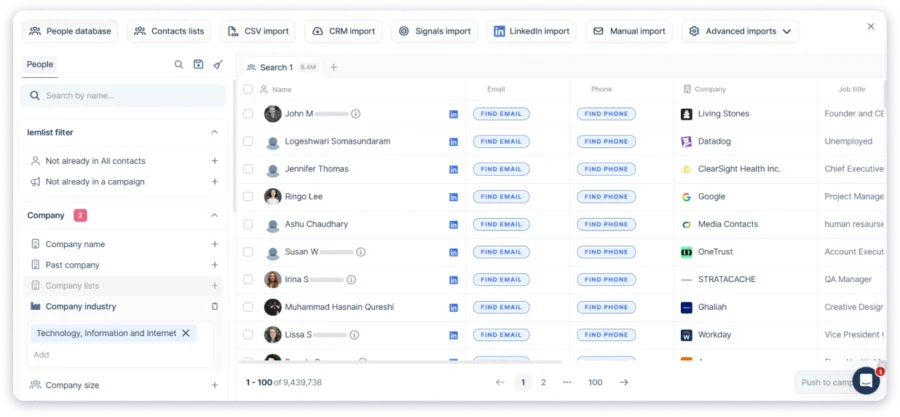
I could not test this hands-on. Both the People database and the Enrichment tab threw a billing lock and bounced me back to the home screen once the trial ended.
This is the most complete part of the product, and it is where Lemlist's history shows.
The Deliverability section has five tabs covering warm-up, outreach, inbox placements, alerts, and settings. Inbox placement breaks your score out by Global, Google, Microsoft, and SMTP or IMAP, with a button to run a fresh test.
Settings holds a tech setup audit and the option to buy domains and mailboxes without leaving the app.
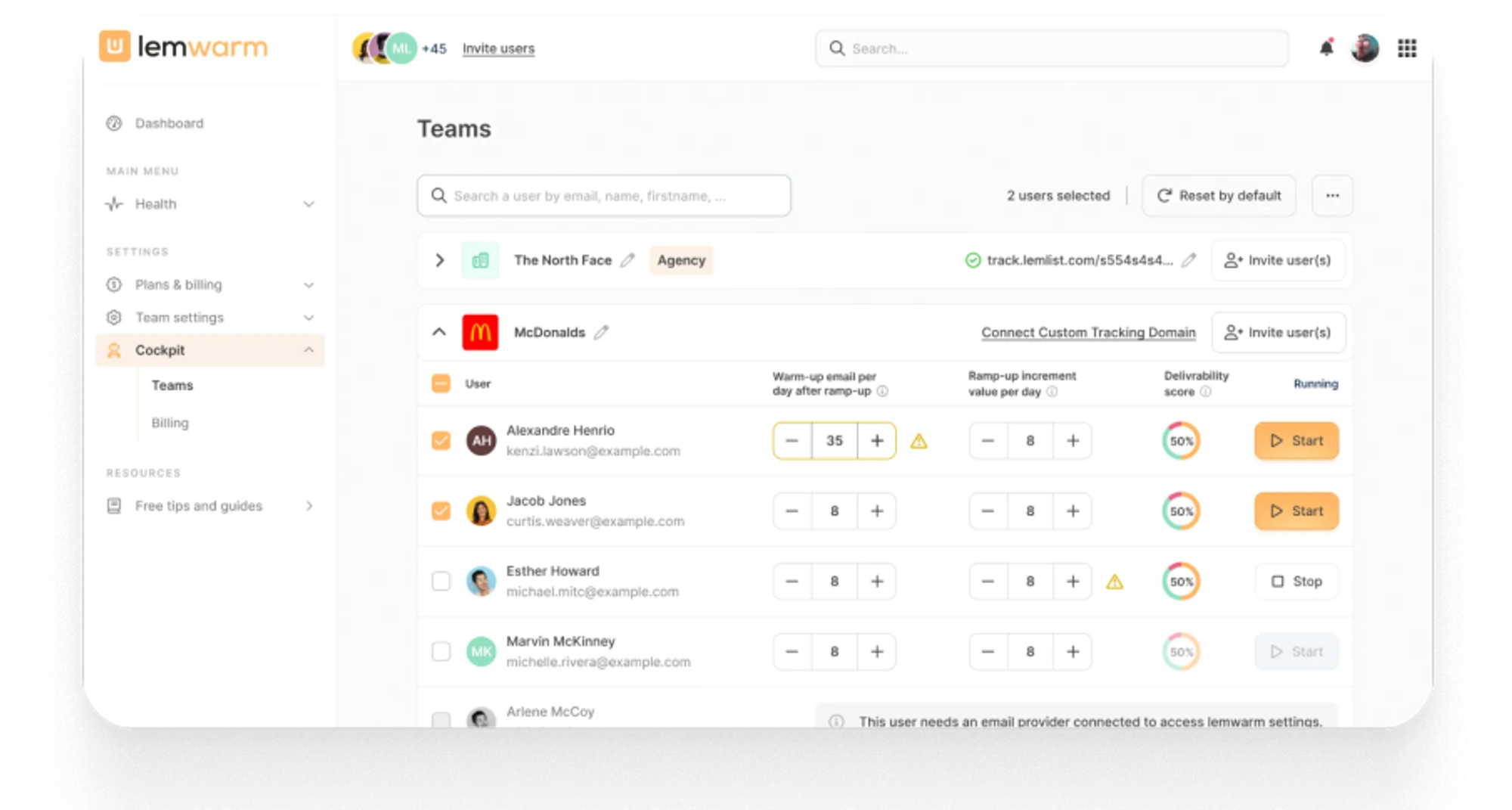
The warm-up scoring is transparent, which I appreciated. Technical setup carries 50% of the score, spam rate carries 30%, mailbox age carries 10%, and blacklist status carries the last 10%.
The score bands are strict too. Below 65, you pause and investigate; between 65 and 90, you warm only, and campaigns unlock at 90.
Now here is the part that gave me pause.
Lemlist's Help Center sets hard sending guidance, and the numbers are conservative. A domain under a month old is capped at 100 emails a day across every mailbox on it. A stabilised new mailbox should open at 30 and treat 30 to 40 a day as a maximum.
Their stated absolute ceiling is 70 a day per provider, counting campaign sends, warm-up traffic, and manual replies together.
A Lemlist blog post, updated in August 2026, tells readers to set a daily quota of no more than 100 emails per sender.
Those two numbers live on the same domain, and they do not agree. If you follow the blog, you breach the ceiling the Help Center sets.
My read is that the Help Center guidance is the one to trust, because it is specific, recent, and matches how reputation actually accrues. The other detail in that documentation is the one most teams miss, which is that reputation budget is per provider and not per mailbox.
Six Google mailboxes share one Google-side reputation. So you scale by adding providers, not by stacking inboxes on the one you already have.
Lemlist is primarily a bring-your-own-mailbox platform. You connect Google, Microsoft, or a custom SMTP and IMAP setup, and the in-app purchase option exists as a convenience rather than the default.
Rotating IPs are listed on every plan, which implies a shared and rotating model. Lemlist never states that outright, and I found no position on dedicated IPs anywhere on the site.
The warm-up network size is not published either, and that is a figure several competitors do disclose.
None of this is disqualifying. It does mean your inbox placement depends on the mailbox quality you source yourself, which is the same reason my guide to cold email infrastructure treats the sending layer and the sending tool as separate decisions.
If you want that layer handled properly, Primeforge gives you real Google Workspace and Microsoft 365 mailboxes with automated DNS and US IPs, ready in about 30 minutes.
Set up cold-outreach-ready mailboxes in 30 minutes
The Unified Inbox stayed accessible even after my trial expired, so I could at least confirm it works as described.
Every reply lands in one thread regardless of channel, so an email reply and a LinkedIn message from the same prospect sit together.
AI reply-intent detection and out-of-office detection run on top of it, which saves a real amount of triage time once volume climbs.
I had written reporting off as thin based on the marketing site alone, and the product corrected me.
The Reports tab is a proper customisable dashboard. You can edit widgets, share views, run multiple tabs, and filter by tag, campaign, or user, with lead-funnel charts included.
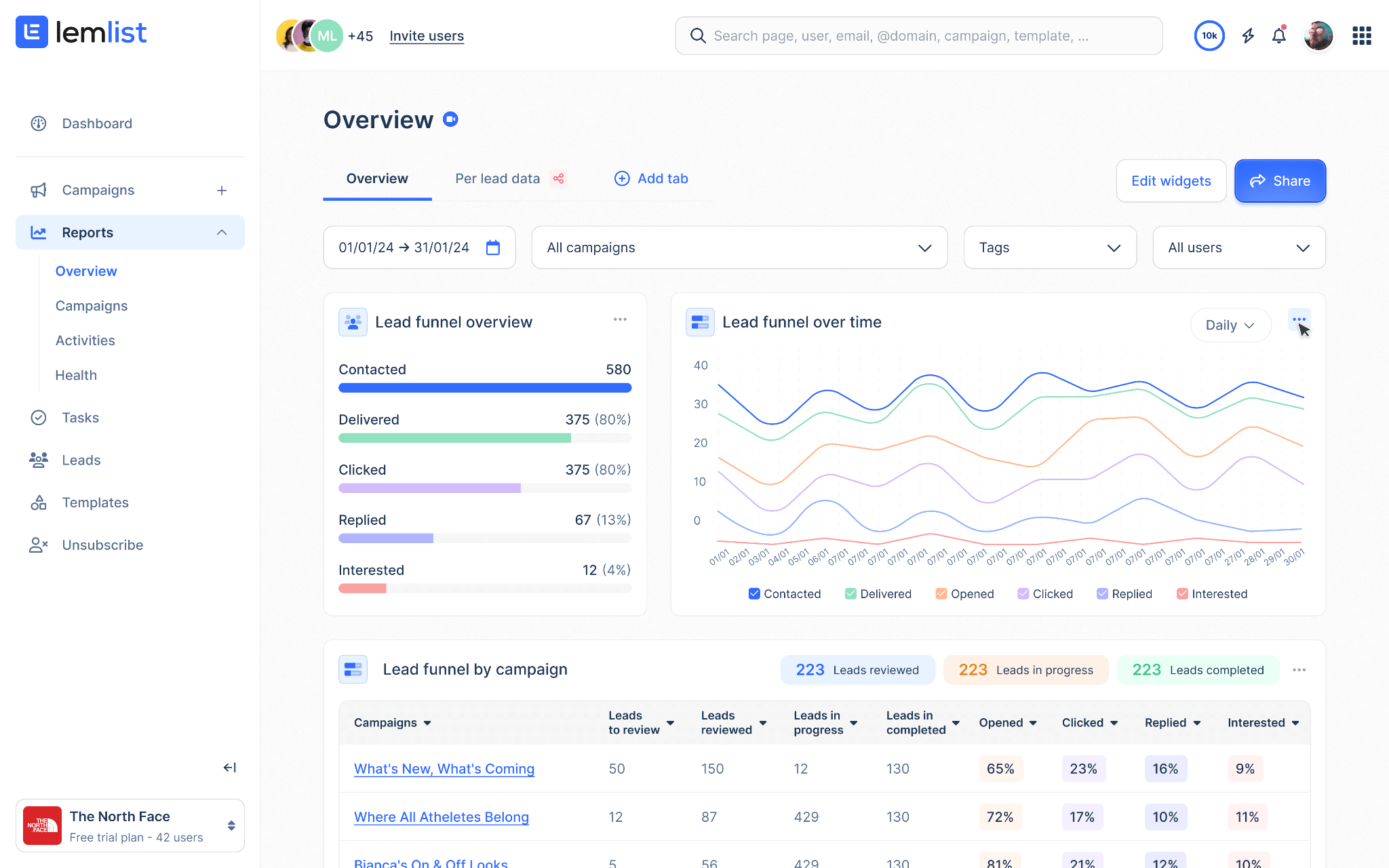
That is stronger than most tools in this price range offer.
The homepage advertises 500+ integrations, and the integrations page itself names roughly 50.
The gap is almost certainly pass-through catalogues like Zapier and Pabbly rather than native connections, so treat the headline figure with caution.
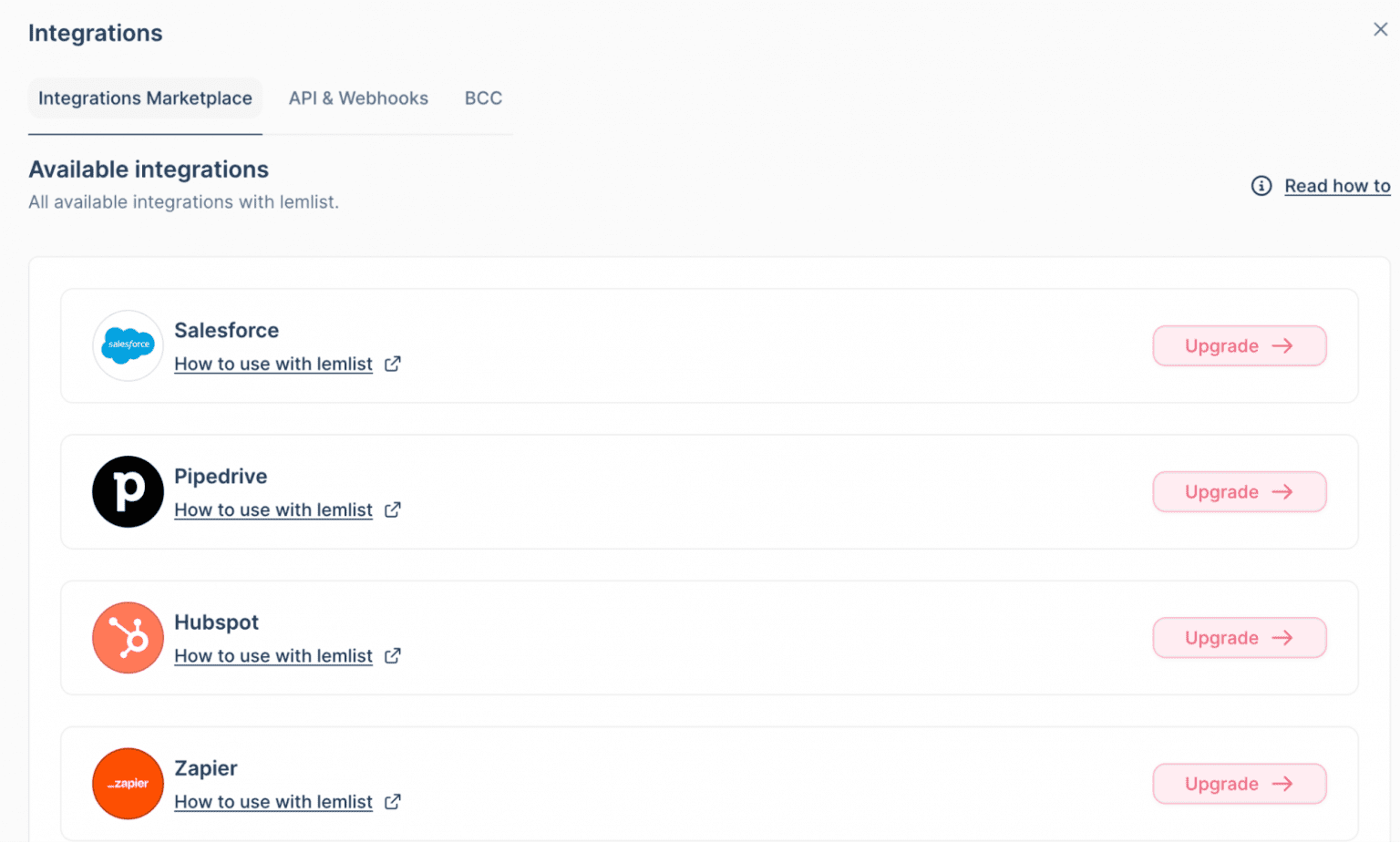
The native list is still solid. Two-way CRM sync covers HubSpot, Salesforce, Pipedrive, Attio, Close and Zoho, and the enrichment waterfall pulls from providers including Dropcontact, RocketReach, Cognism and Findymail.
A developer API is available on every plan. The only stated limit is a request in the Terms to keep calls to a reasonable volume, with no published number.
The pricing page is where I would slow down before signing anything.
The Email plan covers unlimited users and email senders, the 650M+ lead database, unlimited contacts, lemAgent, the Unified Inbox, lemwarm, and CRM integrations.
Multichannel adds five senders per user, LinkedIn and SMS automation, the built-in dialer and VoIP integrations, and task management. WhatsApp automation is an add-on even here, and I could not find its price published anywhere.
Enterprise adds SSO and SAML, custom roles, a dedicated account manager, one-to-one onboarding, and priority support.
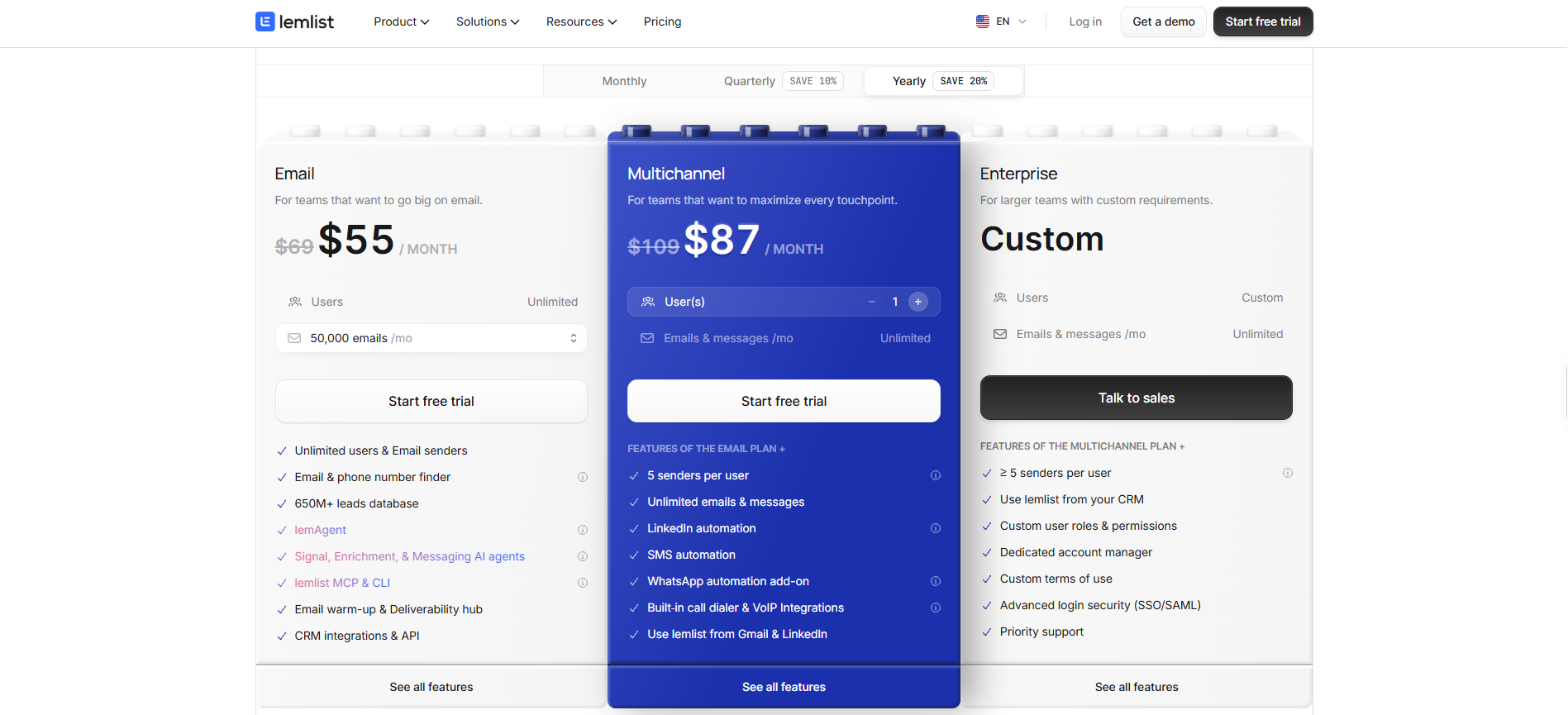
Three things are worth flagging.
So here is the real maths for a five-person sales team that needs LinkedIn seats.
Five Multichannel seats on annual billing come to $435 a month, or $5,220 for the year committed up front. Add a modest 10,000 enrichment credits a month, and you are at $535 a month. Then add your own OpenAI usage for the AI features, plus whatever your mailboxes cost, because Lemlist does not include those by default.
Against that, a flat workspace price starts to look very different, which is why I put Lemlist alongside the rest of the market in my email sending tools comparison.
Lemlist fits well if personalisation depth is your actual differentiator and your sequences live across more than one channel.
It also fits if you want warm-up, lead data, and sending inside one subscription, and you are comfortable bringing your own mailboxes and your own OpenAI key.
It fits badly in three situations.
If your main problem is inbox placement rather than copy, the fix usually sits in your sending layer instead. My roundup of email deliverability tools covers that side properly.
If the per-seat maths is what pushes you away, the alternative I would look at first is Salesforge.
The structural difference is seats. Salesforge runs email and LinkedIn from a single sequence with unlimited mailboxes and unlimited LinkedIn senders, priced per workspace rather than per user. Plans start at $40 a month on annual billing.
Warmup is included at no extra cost through Warmforge, so there is no separate warmup line item and no second tool to manage. Replies across email and LinkedIn land in Primebox™, and A/Z testing lets you run more than two variants at once.
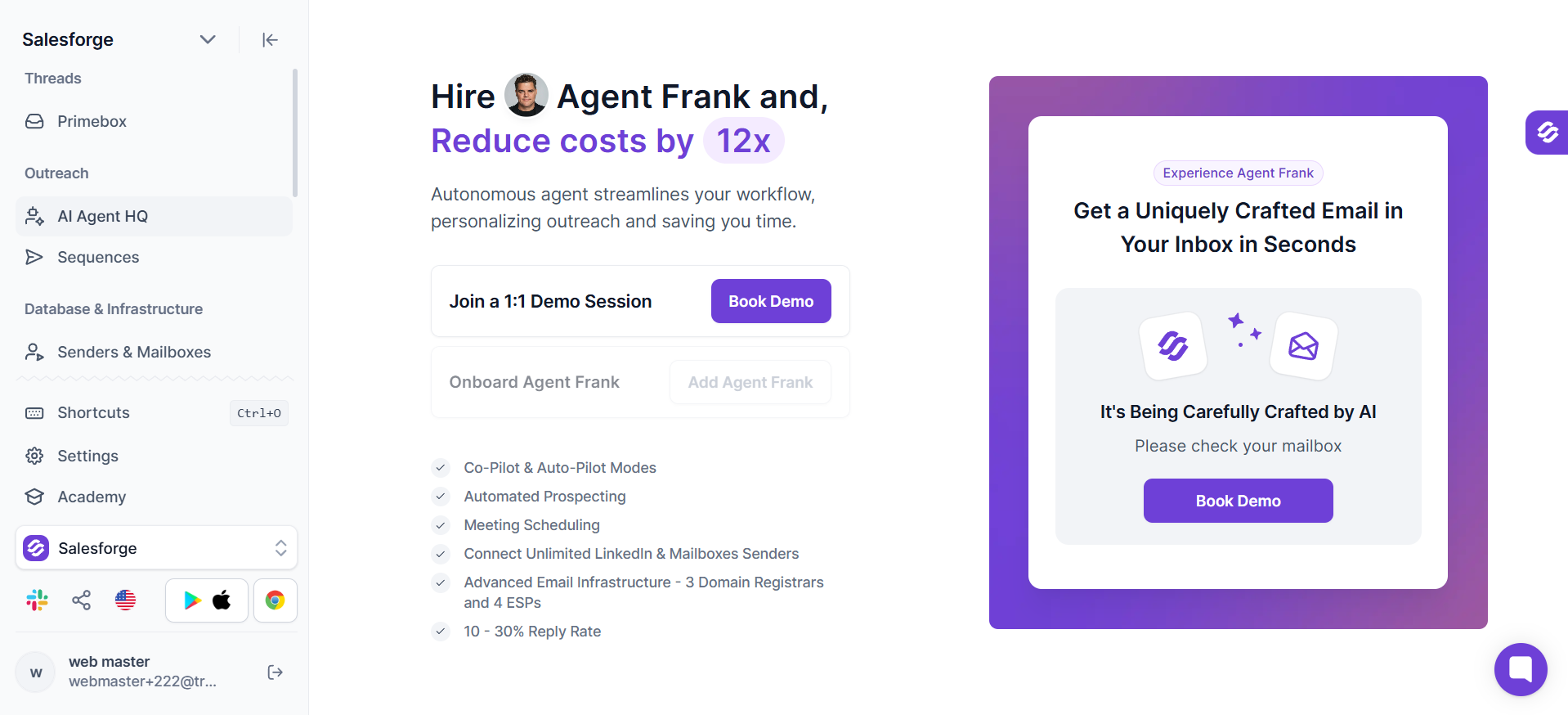
If you want the prospecting and sending handled for you rather than by you, you can hire Agent Frank, the AI SDR built into Salesforge. He runs ICP-based prospecting, writes in 20+ languages, and works in Auto-Pilot or Co-Pilot mode depending on how much control you want to keep.
Lemlist still wins on creative personalisation, and I would not pretend otherwise. If custom images and video landing pages are central to your motion, that is a real reason to stay.
Book a demo to see Agent Frank in action
Lemlist is worth it if you are buying personalisation and multichannel depth, and you can afford the Multichannel tier for every seat that needs it.
The product is mature, the deliverability tooling is genuinely good, and the reporting is better than the marketing site suggests. The gaps I found are honesty gaps rather than quality gaps, and the two that matter most are the sending guidance that contradicts itself and the setup claim that describes provisioning rather than sending.
There are three conditions that would flip my recommendation.
If your team is larger than three people, the per-seat cost outruns the value. If you need multichannel on a tight budget, the entry plan will not deliver it. And if you cannot commit to twelve non-refundable months, the contract terms alone should give you pause.
Test it properly inside the 14 days, because once the trial lapses, the product goes read-only and your evaluation ends with it.
Start a free trial of Salesforge, no credit card required
Lemlist is used to run multichannel outbound campaigns across email, LinkedIn, calls, WhatsApp,p and SMS. It also handles lead sourcing, enrichment, mailbox warm-up through lemwarm, and reply management in a unified inbox.
Lemlist costs $69 a month for the Email plan or $109 per user a month for Multichannel, billed monthly. Annual billing drops those to $55 and $87 per user per month. Enrichment credits are billed separately at one cent per credit.
Yes. lemwarm is included on every plan. The ramp adds one email per day and takes roughly 40 days to reach target volume, followed by a 14-day stabilisation window before campaigns unlock.
Lemlist's Help Center recommends 30 to 40 emails a day from a stabilised new mailbox, with an absolute ceiling of 70 a day per provider across campaign sends, warm-up,p and manual replies. Verify current guidance on their site, since one of their blog posts cites a higher figure.
Lemlist is primarily a bring-your-own-mailbox and connects to Google, Microsoft, or custom SMTP accounts. You can buy domains and inboxes inside the app, but the platform is not a mailbox provider by default.
The AI features are included in the plan, but they run through your own OpenAI account, which you link yourself to. That means OpenAI usage is a separate cost on top of your Lemlist subscription.
Lemlist's Terms of Service describe a fixed-term commitment generally set to 12 months, with the minimum annual fee stated as non-cancelable and non-refundable. Check the current terms before you sign, since they can change.